Mallu Muslim Mms Work Access
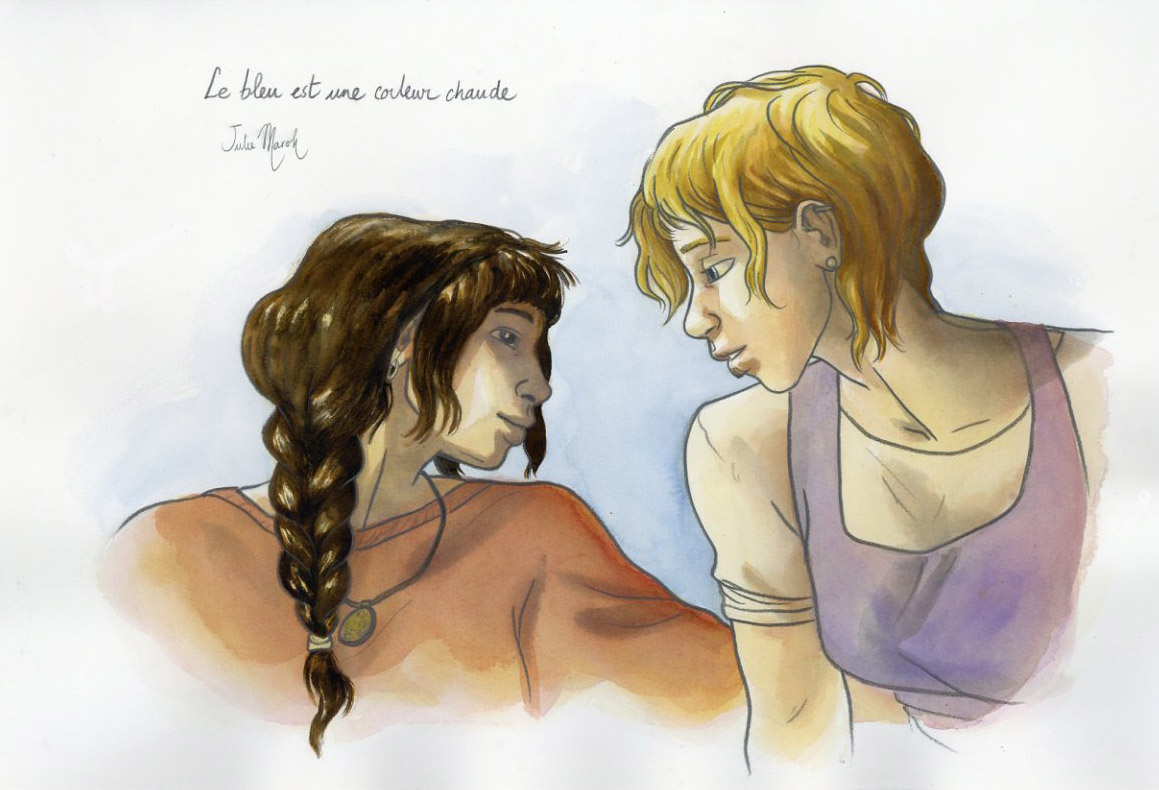
Le Bleu est une couleur chaude, illustration 14
Oeuvre originale.
Artiste : Jul Maroh
Dimensions (cm) : 30x40
Catégorie : Illustrations
Technique : Encre de couleur
Année : 2011
Étiquettes :
430 €
Kerala’s high literacy rate and historical social reform movements—which challenged rigid caste hierarchies and promoted agrarian rights—directly shaped the themes of early cinema. Films frequently addressed the decay of the feudal system ( Janmi system), the rise of communist ideologies, and class struggles. This established a tradition where cinema was viewed not merely as commerce, but as a tool for intellectual engagement.
The foundations of Malayalam cinema are deeply intertwined with Kerala’s literary tradition and social reform movements. The early decades of the industry saw a seamless transition of popular Malayalam literature from the page to the silver screen.
The "Mallu Muslim MMS Work" could refer to a specific project, initiative, or creative endeavor that focuses on showcasing the stories, experiences, and perspectives of the Malayali Muslim community through MMS content. This could include documentaries, short films, photography projects, or even social media campaigns.
The "Mallu Muslim MMS Work" is an innovative and creative way to showcase the stories and experiences of the Malayali Muslim community. By leveraging MMS and digital media, such projects can promote cultural understanding, challenge stereotypes, and provide a platform for marginalized voices to be heard. mallu muslim mms work
Whether exploring local folklore in horror-fantasies like Bramayugam (2024), documenting survival during environmental catastrophes in 2018 (2023), or analyzing the subtleties of human relationships, the industry remains fiercely protective of its roots. By staying unapologetically local, Malayalam cinema achieves a universal resonance, proving that the most deeply rooted stories are often the ones that travel the furthest.
Kerala is globally recognized for its unique political history, characterized by high literacy rates, the world's first democratically elected communist government, and a history of powerful social reform movements led by figures like Sree Narayana Guru. Malayalam cinema has consistently mirrored this acute socio-political consciousness.
: The recipient's MNO then delivers the MMS to the recipient's device. Kerala’s high literacy rate and historical social reform
The DNA of Malayalam cinema is explicitly tied to Kerala’s rich literary tradition and the socio-political movements of the 20th century. The Literary Intersect
The foundational narrative structure of Malayalam cinema is heavily indebted to the rich literary and theatrical heritage of Kerala. Literary Adaptations
After a brief creative lull in the 2000s, a new generation of filmmakers sparked a cinematic renaissance often termed the "New Generation" wave. Filmmakers like Lijo Jose Pellissery, Dileesh Pothan, Mahesh Narayanan, and modern writers like Syam Pushkaran stripped away remaining commercial formulas. The foundations of Malayalam cinema are deeply intertwined
From the revolutionary classic Chemmeen (1965) to modern gems like Ee.Ma.Yau. (2018) which critiques death rituals and class, Malayalam films aren't afraid to talk about the red flag, the church, or the temple. The "Comrade" (communist party worker) is a recurring archetype—sometimes a noble fool, sometimes a corrupt bully. The industry constantly questions the "Kerala Model" of development, showing that while poverty is lower, casteism and religious hypocrisy still fester in the backyards of beautiful homes.
The social implications of creating and sharing content like MMS work can be multifaceted. It can serve as a tool for community building, education, and cultural exchange. However, it's also crucial to consider issues related to privacy, consent, and the responsible use of technology.
2. Visualizing Landscape and Identity: The Geography of Kerala
During the early and mid-20th century, Kerala experienced a massive literary renaissance. Masters of Malayalam literature like Vaikom Muhammad Basheer, Thakazhi Sivasankara Pillai, and M. T. Vasudevan Nair did not just write novels; they directly shaped the cinematic landscape.
Kerala is celebrated for its pluralistic society, where Hinduism, Islam, and Christianity have coexisted peacefully for centuries. Malayalam cinema reflects this secular tapestry while simultaneously drawing rich imagery from local rituals and folklore. Embracing Pluralism
Votre panier est vide.
Kerala’s high literacy rate and historical social reform movements—which challenged rigid caste hierarchies and promoted agrarian rights—directly shaped the themes of early cinema. Films frequently addressed the decay of the feudal system ( Janmi system), the rise of communist ideologies, and class struggles. This established a tradition where cinema was viewed not merely as commerce, but as a tool for intellectual engagement.
The foundations of Malayalam cinema are deeply intertwined with Kerala’s literary tradition and social reform movements. The early decades of the industry saw a seamless transition of popular Malayalam literature from the page to the silver screen.
The "Mallu Muslim MMS Work" could refer to a specific project, initiative, or creative endeavor that focuses on showcasing the stories, experiences, and perspectives of the Malayali Muslim community through MMS content. This could include documentaries, short films, photography projects, or even social media campaigns.
The "Mallu Muslim MMS Work" is an innovative and creative way to showcase the stories and experiences of the Malayali Muslim community. By leveraging MMS and digital media, such projects can promote cultural understanding, challenge stereotypes, and provide a platform for marginalized voices to be heard.
Whether exploring local folklore in horror-fantasies like Bramayugam (2024), documenting survival during environmental catastrophes in 2018 (2023), or analyzing the subtleties of human relationships, the industry remains fiercely protective of its roots. By staying unapologetically local, Malayalam cinema achieves a universal resonance, proving that the most deeply rooted stories are often the ones that travel the furthest.
Kerala is globally recognized for its unique political history, characterized by high literacy rates, the world's first democratically elected communist government, and a history of powerful social reform movements led by figures like Sree Narayana Guru. Malayalam cinema has consistently mirrored this acute socio-political consciousness.
: The recipient's MNO then delivers the MMS to the recipient's device.
The DNA of Malayalam cinema is explicitly tied to Kerala’s rich literary tradition and the socio-political movements of the 20th century. The Literary Intersect
The foundational narrative structure of Malayalam cinema is heavily indebted to the rich literary and theatrical heritage of Kerala. Literary Adaptations
After a brief creative lull in the 2000s, a new generation of filmmakers sparked a cinematic renaissance often termed the "New Generation" wave. Filmmakers like Lijo Jose Pellissery, Dileesh Pothan, Mahesh Narayanan, and modern writers like Syam Pushkaran stripped away remaining commercial formulas.
From the revolutionary classic Chemmeen (1965) to modern gems like Ee.Ma.Yau. (2018) which critiques death rituals and class, Malayalam films aren't afraid to talk about the red flag, the church, or the temple. The "Comrade" (communist party worker) is a recurring archetype—sometimes a noble fool, sometimes a corrupt bully. The industry constantly questions the "Kerala Model" of development, showing that while poverty is lower, casteism and religious hypocrisy still fester in the backyards of beautiful homes.
The social implications of creating and sharing content like MMS work can be multifaceted. It can serve as a tool for community building, education, and cultural exchange. However, it's also crucial to consider issues related to privacy, consent, and the responsible use of technology.
2. Visualizing Landscape and Identity: The Geography of Kerala
During the early and mid-20th century, Kerala experienced a massive literary renaissance. Masters of Malayalam literature like Vaikom Muhammad Basheer, Thakazhi Sivasankara Pillai, and M. T. Vasudevan Nair did not just write novels; they directly shaped the cinematic landscape.
Kerala is celebrated for its pluralistic society, where Hinduism, Islam, and Christianity have coexisted peacefully for centuries. Malayalam cinema reflects this secular tapestry while simultaneously drawing rich imagery from local rituals and folklore. Embracing Pluralism
Oeuvre originale.
« Des monstres sacrés exposés à la Galerie Glénat. » LE MONDE
« Glénat épate la galerie. » ACTUABD
La galerie Glénat vend des illustrations et des planches originales de bande dessinée, elle expose régulièrement des auteurs confirmés ou des jeunes de grands talents Ignorer