YOLOv8 is a computer vision model architecture developed by Ultralytics, the creators of YOLOv5. You can deploy YOLOv8 models on a wide range of devices, including NVIDIA Jetson, NVIDIA GPUs, and macOS systems with Roboflow Inference, an open source Python package for running vision models.
Organizations like the Nonhuman Rights Project (NhRP) utilize habeas corpus lawsuits to argue that highly cognitive species—such as chimpanzees, elephants, and dolphins—should be recognized as legal "persons" rather than "property," granting them the right to bodily liberty. 4. How Individuals Can Impact Animal Welfare and Rights
Providing sufficient space, proper facilities, and company of the animal’s own kind.
The legal status of animals varies dramatically across jurisdictions, reflecting diverse cultural, economic, and political values. Animals as Property
Animal welfare is rooted in the "Five Freedoms," focusing on the physical and mental well-being of animals under human care. It assumes that humans have a right to use animals for food, research, and companionship, provided that . This approach drives improvements in agricultural standards, veterinary care, and zoo enrichment. The goal is humane treatment—ensuring that if an animal is used, its life is as comfortable and stress-free as possible. The Philosophy of Animal Rights
: A philosophical position that animals have inherent moral worth independent of their utility to humans. Advocates often argue that animals should not be used by humans at all—whether for food, research, or entertainment. 2. Core Principles: The Five Freedoms video title art of zoo 1 bestialitysextaboo
By far the greatest number of animals affected—over 80 billion land animals slaughtered annually for food, plus trillions of fish—are raised in intensive confinement systems. Broiler chickens (raised for meat) live in massive warehouses, often with less than a square foot of space per bird. Egg-laying hens are typically confined to battery cages so small they cannot fully extend their wings. Gestating sows spend most of their lives in “farrowing crates” that prevent turning around. These systems prioritize efficiency and profit over welfare, leading to painful mutilations (beak trimming, tail docking, castration without anesthesia), debilitating health problems (lameness, ammonia burns, respiratory disease), and severe behavioral restriction.
: There are also public health implications, as engaging in sexual activities with animals can pose risks of transmitting diseases.
: A more radical philosophical stance asserting that animals have inherent value and moral rights independent of their utility to humans. Proponents often seek to end all human exploitation of animals, including for food, clothing, and experimentation. Standard Frameworks for a Paper
leads globally with comprehensive legislation. The Treaty of Lisbon (2009) formally recognized animals as “sentient beings” rather than mere property. EU farm animal welfare laws ban battery cages, gestation crates, and veal crates, and require environmental enrichment. The EU cosmetics regulation bans animal testing for finished products and ingredients, with a corresponding marketing ban. Several member states have gone further: Germany enshrined animal protection in its constitution; Switzerland requires lawyers for animal abuse victims; the Netherlands became the first nation without stray dogs due to proactive policies. The legal status of animals varies dramatically across
To understand the modern debate, one must first distinguish between the two primary philosophical camps.
At its simplest, animal welfare concerns the treatment of animals—ensuring they are free from suffering, pain, and distress—while animal rights asserts that animals possess inherent value and interests that deserve moral and legal protection, much like humans. However, beneath these simple definitions lies a rich, complex, and often contentious field of inquiry that touches on biology, law, ethics, economics, and culture. This article provides a deep dive into the history, philosophy, practical applications, and future directions of , offering readers a comprehensive understanding of where we stand and where we need to go.
Animal rights advocates reject the premise that animals are property or commodities for human utility. This philosophy argues that animals possess inherent value and certain fundamental rights—most notably, the right to life, liberty, and freedom from exploitation.
While often used interchangeably, animal welfare and animal rights represent distinct philosophical, legal, and practical frameworks. Animal Welfare While often used interchangeably
The (academic, general public, legal, advocacy group)
Routine practices include dehorning, tail-docking, and debeaking without anesthesia, alongside the long-term confinement of pregnant pigs in gestation crates.
Animal welfare focuses on the of animals, particularly those under human care. It operates on the premise that humans can use animals for food, research, or companionship, provided they are treated humanely and their suffering is minimized. Animal Welfare or Animal Rights? What's the difference?
Animal Rights is a moral and philosophical stance, not a scientific one. Championed by thinkers like Peter Singer ( Animal Liberation ) and Tom Regan ( The Case for Animal Rights ), it argues that sentient beings—those capable of suffering and experiencing pleasure—have a right to live free from human use.
You can train a YOLOv8 model using the Ultralytics command line interface.
To train a model, install Ultralytics:
Then, use the following command to train your model:
Replace data with the name of your YOLOv8-formatted dataset. Learn more about the YOLOv8 format.
You can then test your model on images in your test dataset with the following command:
Once you have a model, you can deploy it with Roboflow.
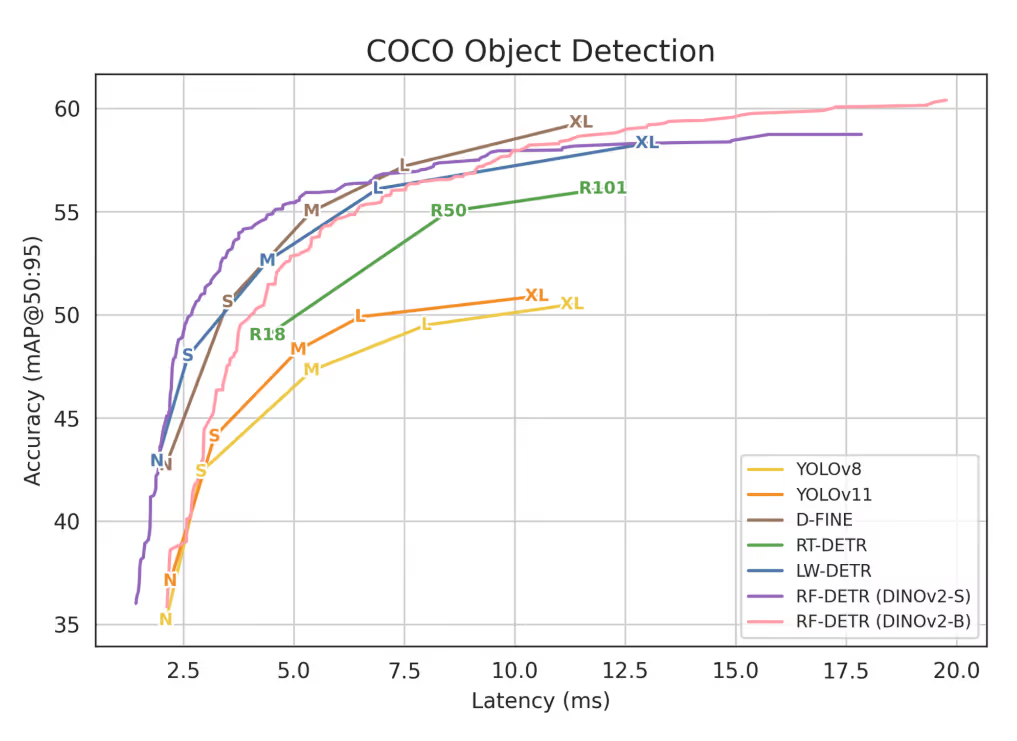

YOLOv8 comes with both architectural and developer experience improvements.
Compared to YOLOv8's predecessor, YOLOv5, YOLOv8 comes with:
Furthermore, YOLOv8 comes with changes to improve developer experience with the model.


