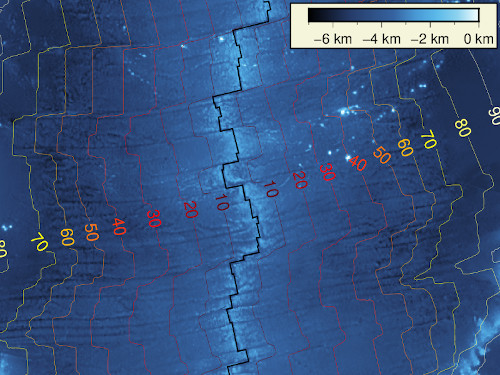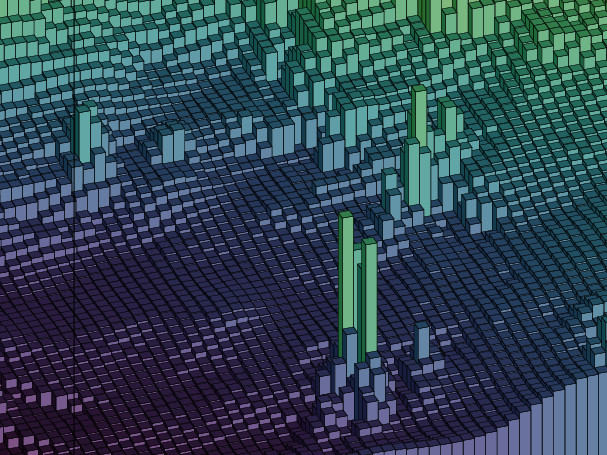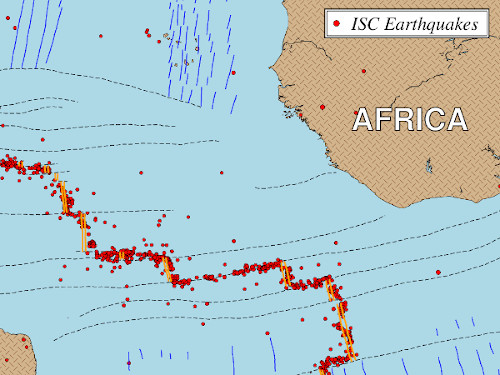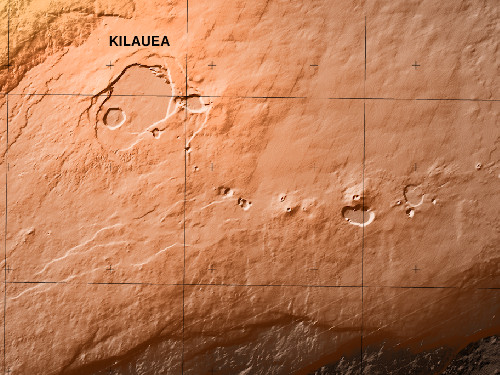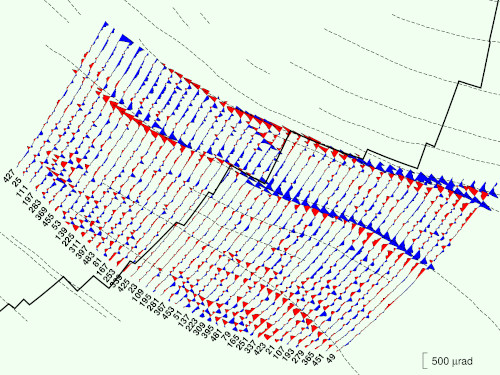
The Generic Mapping Tools (GMT) are widely used across the Earth, Ocean, and Planetary sciences and beyond. A diverse community uses GMT to process data, generate publication-quality illustrations, automate workflows, and make animations. Scientific journals, posters at meetings, Wikipedia pages, and many more publications display illustrations made by GMT. And the best part: it is free, open source software licensed under the LGPL.
Got questions? Join the friendly GMT Community Forum to get help and connect with other users and developers.
Want to use GMT in MATLAB/Octave, Julia, or Python? Check out the GMT interfaces!
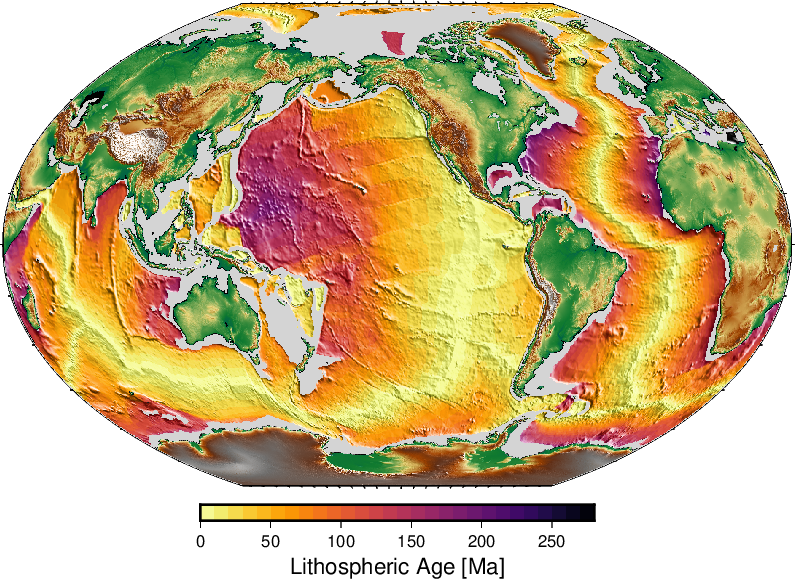
Whether Cartesian, geographic, or time-series, GMT can process your data. GMT enables you to explore new ways to analyze data and to build custom displays for drafts, publications, or final presentations. GMT allows unlimited customization via scripting in several languages.
Visit our Documentation page to find out all that GMT can do for you.
Used GMT in your research? Please consider citing GMT so we can justify the continued development efforts.
GMT has been used from UNIX and Windows command lines for decades. More recently, GMT has been rebuilt as an Application Programming Interface (API) and can now be accessed via wrapper libraries from MATLAB/Octave, Julia, and Python, as well from custom programs written in C or C++.
See all the projects the team is working on in the Ecosystem page.
Want to see the code? All development happens through GitHub in our GenericMappingTools account.

A company needs to move from a VFP 9 system to a modern platform (like .NET or SQL Server) and needs the source to understand the business logic.
To understand why a tool like remains a targeted niche search, it helps to examine the state of Visual FoxPro . Microsoft released its final framework patch, VFP 9.0 SP2 , in October 2007, before officially ending extended support lifecycle updates.
A clean directory folder is designated on the local machine to avoid overwriting existing system paths. unfoxall 54 full
Use 7-Zip or WinRAR to extract unfoxall_54_full.zip into a directory without spaces (e.g., C:\tools\unfoxall\ ).
Loss of source code isn't just an inconvenience; it's a massive financial risk. Moving a legacy system to a modern stack often requires understanding the original business logic hidden inside the compiled code. Unfoxall 54 Full allows developers to audit existing systems, perform necessary security patches, or prepare the logic for migration to SQL-based environments. A company needs to move from a VFP
The original source files were deleted, or the developers who wrote them are no longer available.
The "Full" version includes a detailed configuration file. Edit the fingerprint section: A clean directory folder is designated on the
Restore forms (.scx), menus (.mnx), and program files (.prg) that were otherwise trapped inside the executable .
In short, the powerful tool you are looking for is almost certainly . This is the version that contains the most advanced features and is widely regarded as the "full," unrestricted version within the reverse engineering community.
"os": "Windows_NT 10.0.22621", "gpu": "NVIDIA GeForce RTX 3060", "resolution": "1920x1080", "webrtc_mode": "disabled_proxy", "canvas_mode": "noise"
In the realm of legacy database management and software engineering, losing raw source code files (such as .prg , .scx , and .vcx ) while retaining an active executable ( .exe ) is a common nightmare. UnFoxAll acts as an emergency engineering bridge, allowing administrators to reverse-engineer binaries and recreate lost development environments. What is UnFoxAll?